
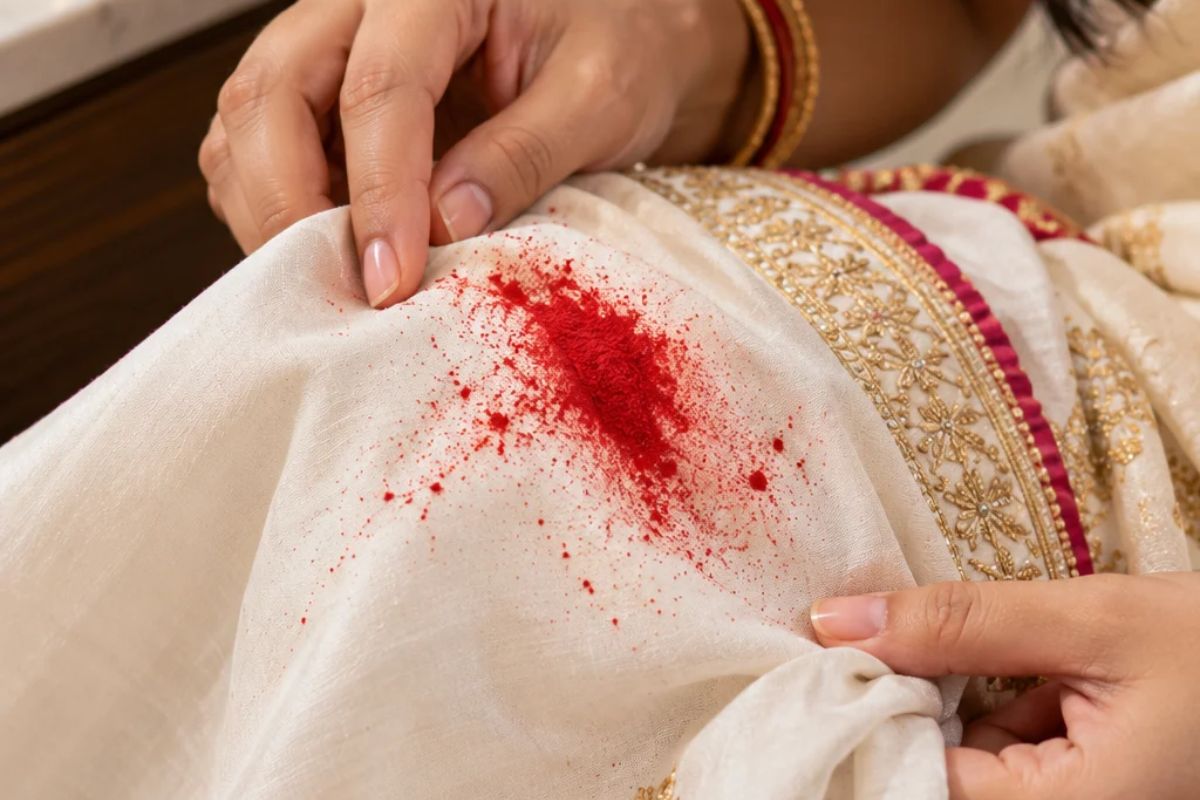
How to Remove Sindoor Stains from Clothes & Sarees
Knowing how to remove sindoor stains from clothes saves many a saree and shirt – sindoor is a bright, oily pigment that spreads fast and sets if ignored. Treated correctly, most marks lift cleanly. This guide covers a sindoor stain on saree fabric, removing kumkum stains, sindoor marks on white shirts and safe vermilion stain removal.
Why Sindoor Stains Are Tricky
Sindoor combines strong red or orange pigment with an oily base, so it both dye-stains and grease-stains fabric at once. Rubbing spreads the pigment, and heat sets it, so the method is to cut the oil first, then lift the colour – gently and quickly.
How to Remove Sindoor Stains from Clothes, Step by Step
The reliable method for a fresh sindoor mark:
- Blot and lift excess powder; do not rub it in
- Apply a little dishwashing liquid to cut the oily base
- Work gently from the back of the stain with cold water
- Rinse, check, and wash before drying - never heat-dry a stain
What You'll Need
Everyday items handle most sindoor marks: cold water, dishwashing liquid, white vinegar, baking soda, and for whites, a little lemon or diluted hydrogen peroxide. A clean cloth and a soft touch do the rest.
Common Mistakes to Avoid
These set a sindoor stain for good:
- Rubbing, which spreads the red pigment wider
- Using hot water, which sets both oil and colour
- Drying before the mark is fully gone
- Scrubbing delicate saree fabric too hard
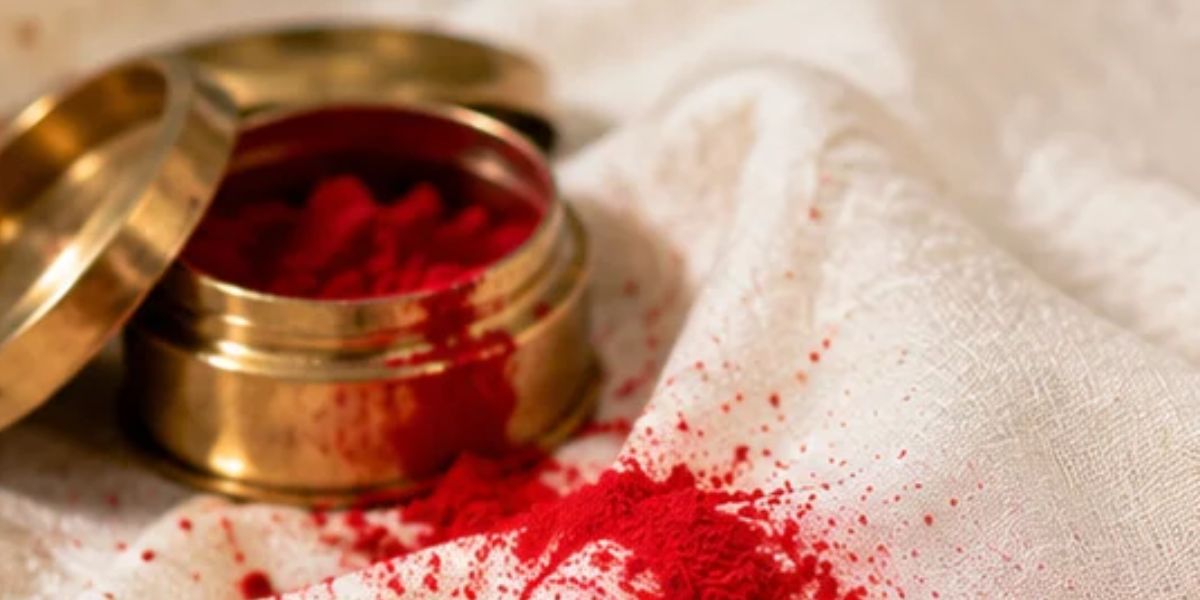
Removing a Sindoor Stain from a Saree
A sindoor stain on saree fabric needs gentle, fabric-first care: blot the powder, cut the oil with a dab of dish soap, and work cold from the reverse. For silk or embellished sarees, do not experiment at home – the pigment and the fabric are both at risk, so professional vermilion stain removal is the safe choice.
Removing Sindoor from a White Shirt
A sindoor mark on a white shirt shows the most, so treat it carefully:
- Lift excess powder without spreading it
- Cut the oil with dish soap, then rinse cold
- Dab diluted hydrogen peroxide or lemon on remaining colour (test first)
- Repeat before washing
- Only dry once no red or orange remains
Fabric-by-Fabric Tips
Match the method to the fabric:
- Cotton: tolerates dish soap and a longer cold soak
- Silk: gentle blotting only, then professional care
- Wool: cool water, mild detergent, minimal rubbing
- Synthetics: dish soap and cold rinse
- Saree borders and zari: do not treat at home
- Dry-clean-only: blot and take it to a professional
Home Remedies for Kumkum and Sindoor
Simple helpers for a kumkum stain:
- Dishwashing liquid to cut the oily base
- Baking-soda paste to absorb and lift pigment
- White vinegar diluted on cotton and synthetics
- Lemon or diluted peroxide on whites only
- Cold water throughout to stop the colour setting
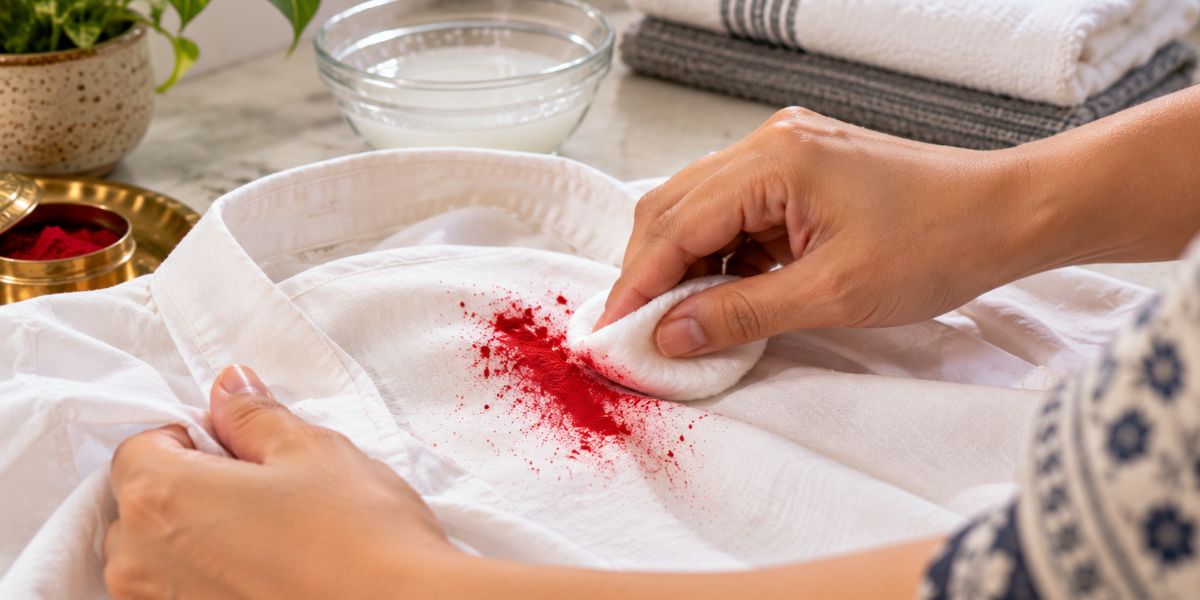
What Not to Do
These make sindoor stains permanent:
- Do not use hot water or a dryer before the stain is gone
- Do not rub, which spreads the pigment
- Do not treat silk or zari sarees at home
Cut the oil, lift the colour, keep it cold – gently and fast.
When to Call a Professional
Sarees and delicate fabrics are best left to experts. Cloud Dhobi’s saree and dry cleaning service removes sindoor safely:
- Silk, chiffon and embellished sarees
- Sindoor on bridal and festive wear
- Dry-clean-only garments
- Set-in or previously washed sindoor stains
- White and light fabrics where pigment lingers
Professional treatment lifts the oil and vermilion pigment together without spreading or bleaching the fabric.
For a sindoor-stained saree, a professional clean is far cheaper than a damaged garment.
Home Treatment vs Professional Cleaning
The honest comparison:
- Home treatment: fine for fresh marks on everyday washable fabrics
- Professional cleaning: best for sarees, silk and set-in sindoor
Judge by the fabric’s value and how long the stain has sat.
How to Prevent Sindoor Stains
A little care prevents most marks:
- Apply sindoor carefully, away from draped fabric
- Keep a tissue handy during rituals
- Blot any drop immediately, before it spreads
- Pre-treat the same day, not the next
Fast action keeps a drop of sindoor from becoming a set stain.
Why Choose Cloud Dhobi for Sindoor Stains
- Oil-and-pigment removal safe for sarees and delicates
- Doorstep pickup and delivery across Delhi NCR
- Published rates - no surprise charges
- WhatsApp booking with a written quote first
- Expert care for bridal and festive wear
See the dry cleaning cost or how professional care protects delicate fabrics, and book a doorstep pickup for any sindoor stain you would rather not risk at home.
A Quick Tip to Remember
“Cut the oil with dish soap, lift the colour cold, and never treat a silk saree at home. That is how sindoor comes out clean.”
Final Thoughts
Learning how to remove sindoor stains from clothes means handling oil and pigment together: blot, cut with dish soap, lift the colour cold, and keep heat away. For sarees, silk and set-in marks, let a professional handle it – and your clothes stay spotless.
Frequently Asked Questions
How do I remove a fresh sindoor stain from clothes?
Lift the excess powder, cut the oily base with dish soap, work cold from the back, rinse, and wash before drying.
How do I remove sindoor from a saree?
Blot and cut the oil gently, but for silk or embellished sarees use professional vermilion stain removal to protect the fabric.
How do I get a kumkum stain out of a white shirt?
Lift the powder, cut the oil with dish soap, dab diluted peroxide or lemon on the colour (test first), and dry only once clean.
Does dish soap remove sindoor stains?
Yes – dishwashing liquid cuts the oily base in sindoor, which is the key first step before lifting the pigment.
Why does sindoor stain so badly?
Sindoor combines strong pigment with an oily base, so it dye-stains and grease-stains at once and sets with heat.
Can sindoor stains be removed from silk?
Only with great care – blot gently and avoid home experiments; professional cleaning is safest for silk and sarees.
Does hot water help with sindoor stains?
No – hot water sets both the oil and the pigment, so always use cold water for vermilion stain removal.
Can dried sindoor stains be removed?
Yes – soak in cold water with dish soap, treat the colour with vinegar or peroxide, and repeat; avoid heat until gone.
Can Cloud Dhobi remove sindoor from sarees?
Yes – Cloud Dhobi removes sindoor from sarees and delicate wear with fabric-safe, pigment-lifting methods.
How do I prevent sindoor stains?
Apply sindoor away from draped fabric, keep a tissue handy, blot any drop immediately, and pre-treat the same day.

Senior Fabric-Care Content Specialist, Cloud Dhobi
15+ years writing on garment and saree care in India. Vaibu helps Delhi NCR households rescue festive and ritual wear from stains.
Sindoor on a precious saree? Book a Cloud Dhobi pickup for fabric-safe stain treatment – free doorstep service across Delhi NCR.
Categories
- Accessories
- Accessories Cleaning Services
- Baby Care
- Blog
- Carpet Cleaning
- Cleaning & Hygiene
- Clothing Care
- Dry Cleaning Services
- Dry Cleaning Tips
- Express Laundry Services
- Fabric Care
- Guides
- Gym Hygiene Tips
- Home Services
- Laundry Services
- Laundry Tips
- Lifestyle
- Sanitization Services
- Shoes Cleaning
- Steam Iron
- Sustainability Trends
Tags
- #AccessoryCleaning
- #CarpetCare
- #ClothesCare
- #ClothesMaintenance
- #ClothingCare
- #CloudDhobi
- #CloudDhobiFranchise
- #CommercialCleaning
- #DelhiLaundry
- #DesignerClothesCare
- #DryCleanGuide
- #DryCleaning
- #DryCleaningTips
- #EcoFriendlyLaundry
- #FabricCare
- #FabricProtection
- #FranchiseOpportunity
- #FreshLaundry
- #Laundry
- #LaundryBusiness
- #LaundryCare
- #LaundryFranchise
- #LaundryFranchiseIndia
- #LaundryGuide
- #LaundryInDelhi
- #LaundryService
- #LaundryServices
- #LaundryTips
- #LuxuryClothingCare
- #OfficeHygiene
- #ProfessionalDryCleaners
- #WardrobeCare
- Blanket Dry Cleaners
- Clothes Care Tips
- Deep Cleaning Process
- Dry Cleaning
- Eco-Friendly Cleaning Services
- Fabric Maintenance Guide
- Gentle Fabric Cleaning
- Laundry Services
- Laundry Trends 2025
- On-Demand Laundry
- Premium Dry-Cleaning
- Services
- Smart Laundry Technology